Friday, March 10, 2006

THE SPEAKING TREE

Posted by Picasa

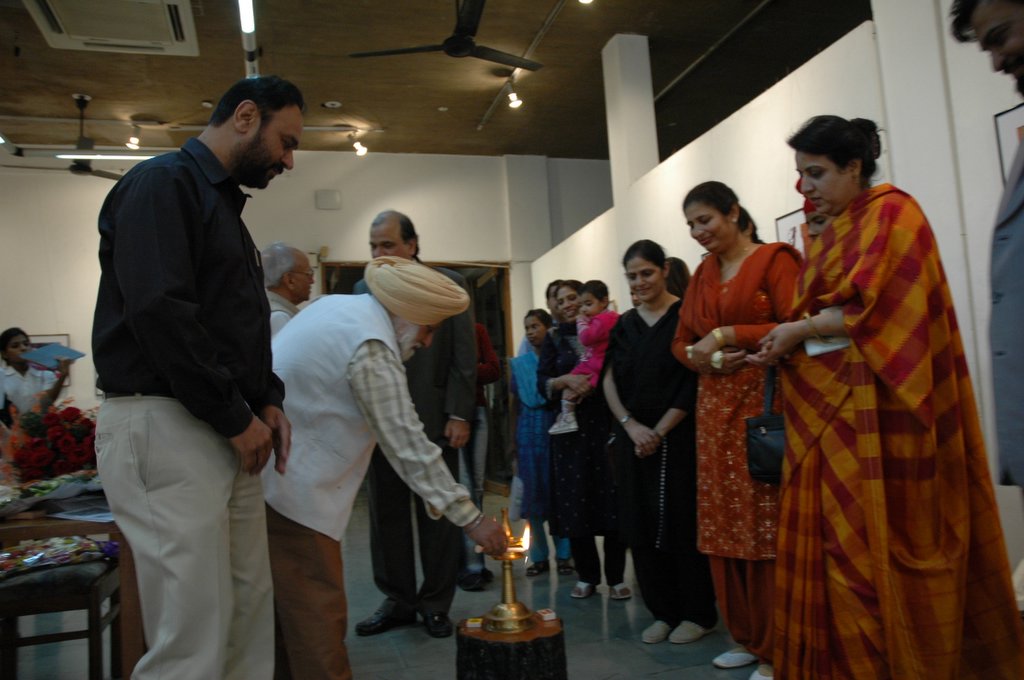
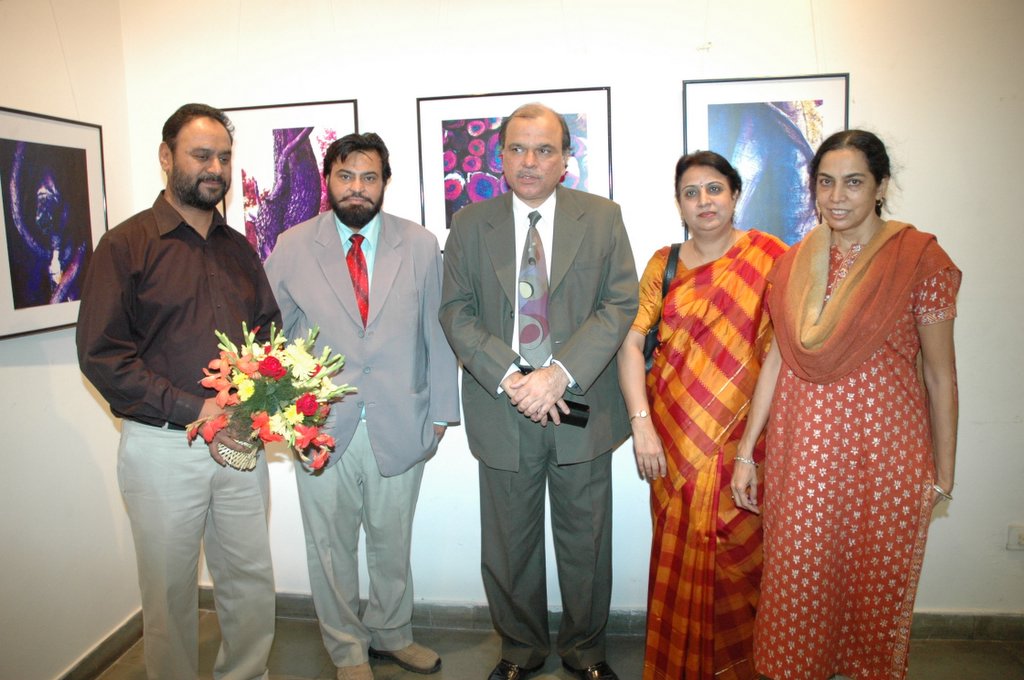
INAUGURATION CEREMONY 'THE SPEAKING TREE'

Mr. S.M.KHAN
(Press Secretary to The President of India Hon. Sh. APJ ABDUL KLAM)
Inaugurating "The Speaking Tree"
 Posted by Picasa
Dr. Sutinder Singh Noor Litting the Lamp
in the company of Dr. Vanita,Charnjit Kaur,Savi and Manjit Kaur Posted by Picasa
Rajiv Virdy with Shagun and baby Posted by Picasa
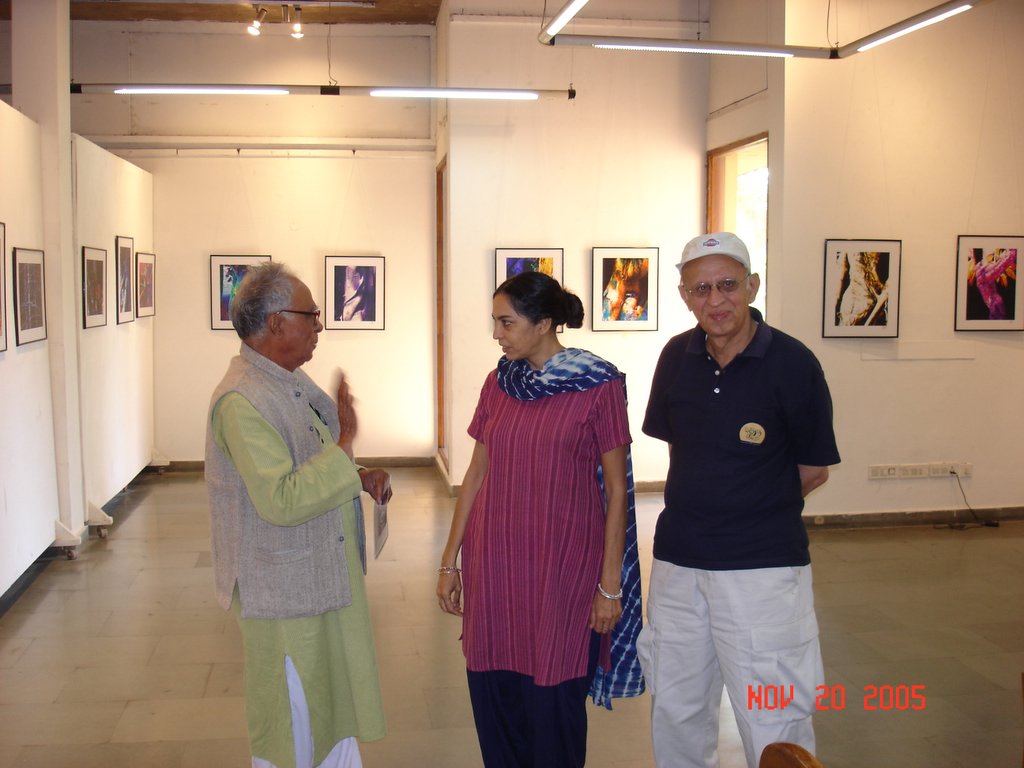
Shri Rawail Singh Secretary Punjabi Academy Delhi enjoying images Posted by Picasa
England Based Writter Swarn Chandan on the Comment Book Posted by Picasa
Prominent Artist Arpana Caur with Shanti Dev and an art lover Posted by Picasa
Eminent Artist Shri Shanti Dev in Gallary Posted by Picasa
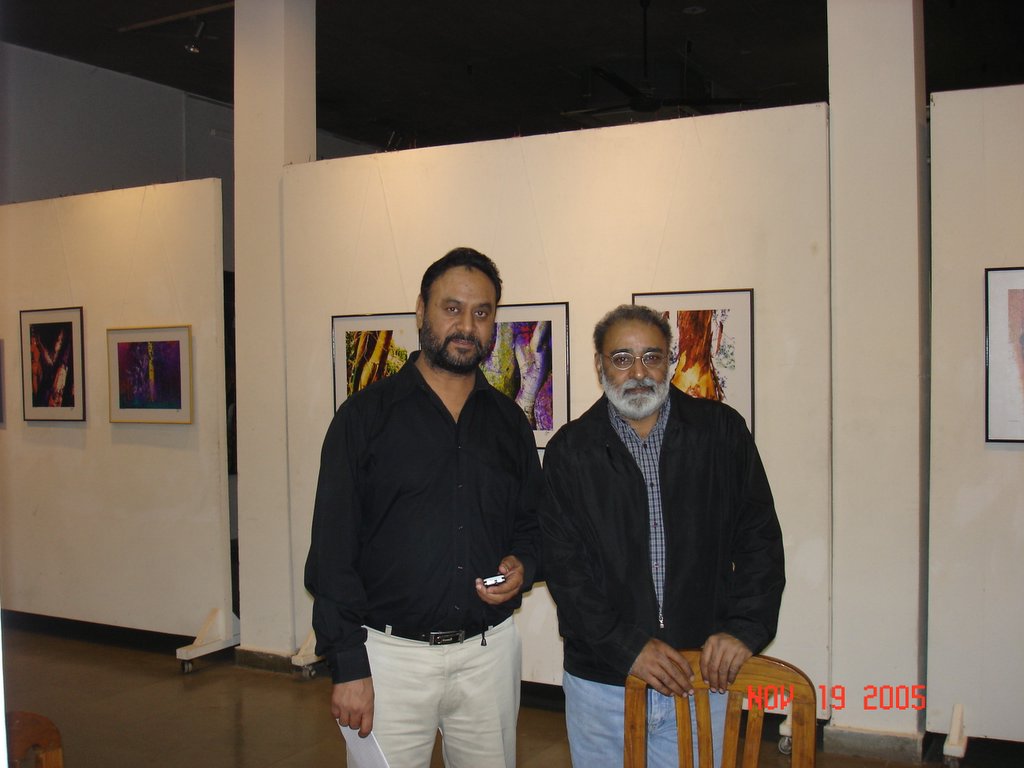
Swarnjit Savi with eminent Photo Artist Mr. A.P. Singh (PAU ,Ludhiana) Posted by Picasa
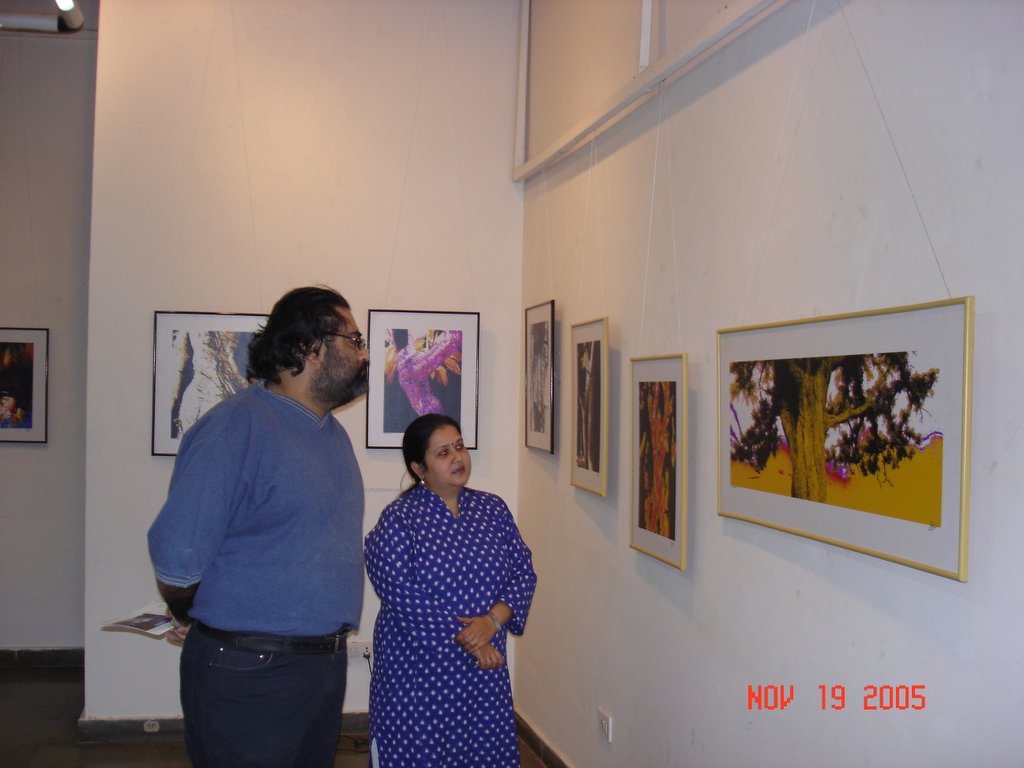
Bandeep Singh (India Today) with his wife watches images Posted by Picasa
 Posted by Picasa

 Posted by Picasa

Thursday, February 16, 2006

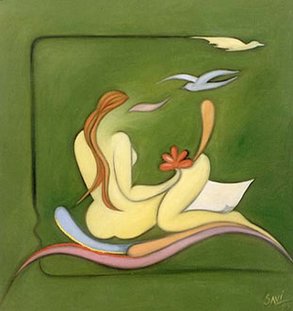
Posted by Picasa "An Offering" oil on canvas 30" x 30"
from 'Desire' a series of 35 oil paintings.
 Posted by Picasa

LEELA OF THE TWO-FACED MUSE

Between the abstract and the tactile, the two poles of Swaranjit Savi’s artistic world, fans out the eternal play of the human body. Though he shatters the hegemony of mind over body, both submit to an unqualified celebration of physicality that knows of no system of thought, tradition or indoctrination. That’s why his faces admit of no identity. Savi’s encounter with human forms allows no mediation of any art tradition; the body in his works is neither depicted in any traditional Indian style or school of painting, nor does it follow any modernistic standards. He steps out of all dogma to build a primal dialogue with human forms. As he straddles the two worlds of poetry and painting, Savi imbues each with the other’s possibilities. If his canvases have a lyrical throb to them, his poems are spread out on deepening perspectives. When his two-faced muse turns to his engagement with body, scenes and syllables merge to create a world of Leela -- a celebration of body and beyond.
Even as Savi liberates the body from the shackles of interpretative dogma, he also emancipates the imagination from the rootless abstraction.

Wednesday, February 15, 2006

THE SPEAKING TREE

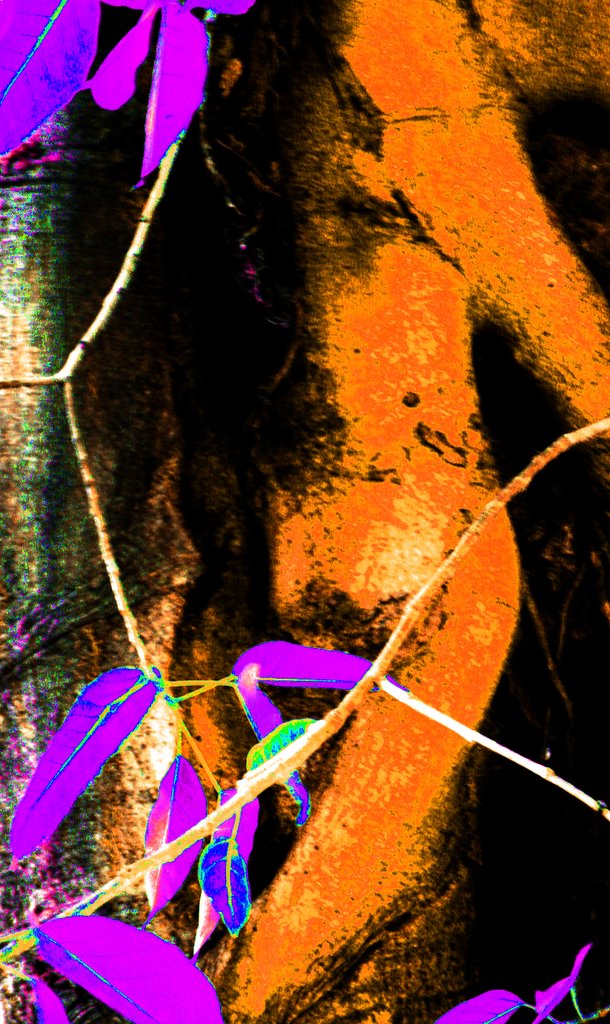
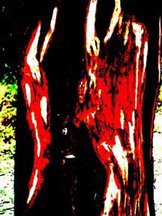
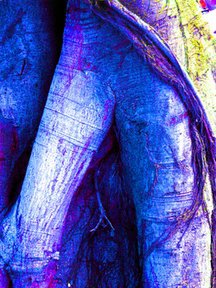
Savi’s art has more to do with excavation than representation. The photographer in him does not as much focuses, crops out or narrows down as scoops out. By disinterring the human images buried in the trees, he reinstates the human in nature. His effort to search for the parallels of human patterns in the texture of trees is much like that of scientist who watches a drama of pulsating organisms in what appears a mere blob of blood to the naked eye.
In these photographs, Savi frames out bends, stems and crevices of trees to compose metaphors of human desire. Through the filter of his amazing inventiveness, human figures in trees emerge like sculptures out of stone. Not coincidentally, his compositions indicate an atavistic urge towards the erotic art of Khajuraho.
After his view-finder excavates what can be termed as `the unconscious of the trees, the painter in him imbues it with interpretation, imposing the frames with emphatic hues in primary tones of blood red, green, indigo and yellow. His digital art helps him put a surreal skin on the frames and animate the figures so that they can best be described as digital sculptures.
In Savi;s photographs, one can locate an uncanny echo of the miniature art of the 17th and 19th century, especially the Kangra one. Trees served as important props in the drama of Radha-Krishna love in these miniatures. To heighten the Sringar rasa, the artist would show two trunks of a tree coiled around each other. Savi zooms in on this stylization of miniatures to recuperate a range of emotive themes.
In this series, he not only attempts to shift the co-ordinates of his expression but also yearns to re-configure the genre of photography.

Tuesday, February 14, 2006

 Posted by Picasa

Savi makes a poetic comeback with Ashram

Savi makes a poetic comeback with Ashram

Amrita Chaudhry

Ludhiana, July 15: A WELL-KNOWN publisher, painter and poet, Swaranjit Savi, makes his comeback to the world of poetry after almost a decade-long hiatus with his book Ashram. It did not take that long to write the poems, says Savi, as it took to compile the book. The writer of much-talked about and controversial books Dehi Naad and Kameshwari, Savi began his foray into the world of poetry in 1987 with Avagya and followed it up in 1990 with another book, Dard Piyarer Hon Da. Both books, according to the writer, concentrated on Punjab in those times, and then in 1994, came Dehi Naad, in 1998, Kala Hashiya Te Suha Gulab with Desire and Kameshwari published in 1999. After this a long silence followed, which was broken by Ashram in 2005.
‘‘My earlier collections of books dwelt on one subject but then soon I saw myself responding to a lot many things around me. This gave birth to so many poems. I wrote on nature, death and many other things. So for Ashram, I spent two years trying to design it and compile it in such a way that the poems which are written on so many different thing can reflect myself,’’ says Savi as he explains his book. The book will be released on July 17.


Talking about his poetry, Savi, especially like that of Dehi Naad and Kameshwari, which created a lot of furore in Punjabi poetic circles, says, ‘‘I knew that these books will create a controversy for these books dealt with celeberation of sex which is a taboo in our society. See we all can discuss sex in group, shred it down to the minutest detail but can never write about it, especially in first person. These books attracted sharp criticism but equal acclaim too. Some called it a shoddy piece of porn while others called it art. For me, these poems were a confession, but then we all are scared of making confessions. Yet these books gave way to a new genre in Punjabi poetry and many are now copying it.’’ Kameshwari, which is a long poem, was staged also.

The Speaking Tree

 Posted by Picasa